 Most viewed Most viewed |
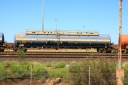
0012 Comeng NSW 110411 09997400 viewsNelson Point, empty 116 kL Comeng NSW built tank waggon 0012 from 1972, one of three such tank waggons.
|
|
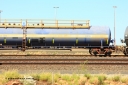
0013 Comeng WA 110411 10017400 viewsNelson Point, empty 116 kL Comeng WA built tank waggon 0013 from 1974-5, one of six such tank waggons.
|
|
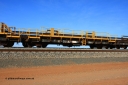
6209 Comeng WA 110619 1882400 viewsSouth of Mooka Siding, the Steel Train or rail recovery and transport train, flat waggon #12, 6209, a Comeng WA built flat waggon from January 1977 under order no. 07-M-282 RY.
|
|
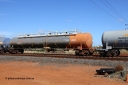
0018 Comeng WA 150314 7750400 viewsBing Siding, empty 116 kL Comeng WA built tank waggon 0018 from 1974-5, one of six such tank waggons, wearing the BHP Billiton Earth livery.
|
|
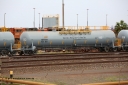
0034 CNR - QRRS China 150523 8209400 viewsNelson Point, empty 116 kL CNR-QRRS of China built tank waggon 0034, one of a second batch delivered in 2015 with safety slogan 'Think Safe + Work Safe = Go Home Safe'.
|
|
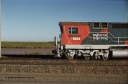
243-17400 viewsNelson Point departure yard, BHP Billiton's CM40-8M unit 5634 'Boodarie' a Goninan WA GE rebuild unit serial 8151-07 / 91-120 in the new 'earth' or 'bubble' livery as it heads up an empty train waiting departure time. August 2003.
|
|

01539-02540 080304 2195400 viewsThomas Yard, down the rail welding end, new FMG ore waggon pair 1539 slave and 2540 control, built by China Southern or CSR at their Zhuzhou Rolling Stock Works in China in 2007. 4th March 2008.
|
|
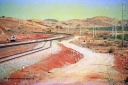
246-04400 viewsCape Lambert, yard view of the then new extension to the south for the West Angelas mine was coming on stream, the just visible siding (rejoining) on the far left will become a compressor waggon holding road, the 6 km and Boat Beach Rd grade crossing are around the corner to the left. Closest to the camera is the extended No. 1 Road which becomes the Empty Car Line from car dumper one for the Deepdale traffic. Next is the original line or Mainline and the third line across is the Loaded Car Line for the West Angelas traffic to the new car dumper 2. The Boat Beach Rd can be seen on the extreme right. 22nd May 2002.
|
|
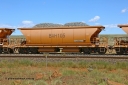
210322 9577400 viewsNear Gecko on Rio Tinto's Dampier - Tom Price line is Chinese built ballast waggon BAH 105 on a loaded ballast rake. Location is roughly here. 22nd March 2021.
|
|
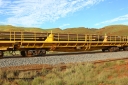
210510 1148400 viewsNear Galah on the Rio Tinto Dampier - Tom Price line at the 89.5 km, RTW type intermediate rail waggon RTW 005 on Rio Tinto's Gemco Rail built rail train consist. 10th May 2021. Location.
|
|
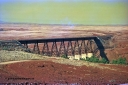
255-01400 viewsFortescue River bridge on the Robe River Cape Lambert to Deepdale line at the 115.8 km looking south. Geodata location here. May 2002.
|
|
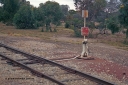
245-30400 viewsMinnipa yard, looking in the up direction at the switch stand from goods siding 2 to goods siding 3 located at the down (north) end of the yard. 7th April, 2003.
|
|
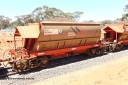
190129 4260400 viewsBinduli, on Mineral Resources Ltd loaded iron ore train service from Koolyanobbing to Esperance #3033 with MRL's MHPY type iron ore waggon MHPY 00344 built by CSR Yangtze Co China serial 2014/382-344 in 2014 as a batch of 382 units, these bottom discharge hopper waggons are operated in 'married' pairs.
|
|
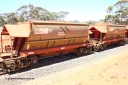
190129 4315400 viewsBinduli, on Mineral Resources Ltd loaded iron ore train service from Koolyanobbing to Esperance #3033 with MRL's MHPY type iron ore waggon MHPY 00072 built by CSR Yangtze Co China serial 2014/382-72 in 2014 as a batch of 382 units, these bottom discharge hopper waggons are operated in 'married' pairs.
|
|
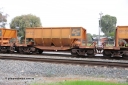
140601 4501400 viewsWoodbridge, empty Carina bound iron ore train #1035, CFCLA leased CHCH type waggon CHCH 7717 these waggons were rebuilt between 2010 and 2012 by Bluebird Rail Operations SA from former Goldsworthy Mining hopper waggons originally built by Tomlinson WA and Scotts of Ipswich Qld back in the 60's to early 80's. 1st June 2014.
|
|
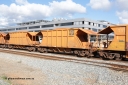
140601 4622400 viewsMidland, loaded iron ore train #1030 heading to Kwinana, CFCLA leased CHEY type waggon CHEY 8042 one pair of 120 bar coupled pairs built by Bluebird Rail Operations SA in 2011-12. 1st June 2014.
|
|
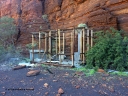
160710 iPh5S 2794400 viewsWittenoom Gorge, Colonial Mine, old build frame still standing along the north wall on the upper level.
|
|
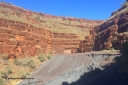
160710 iPh5S 2795400 viewsWittenoom Gorge, Colonial Mine, looking in a west / south west direction across the upper level on the tailings to adits 27 and 28 from the old building frame.
|
|
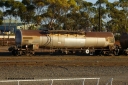
130224 IMG P12529400 viewsWest Kalgoorlie, ATEY 4728 ex NSW NTAF type tank waggon for AMPOL, recoded to WTEF when arrived in WA in 1995, then WTEY, in BP Oil service. Peter Donaghy image.
|
|
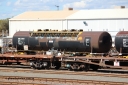
140406 IMG 1931400 viewsWest Kalgoorlie, Peter Donaghy image.
|
|
| 19260 files on 963 page(s) |
 |
|
|
|
|
|
|
|
718 | |
|
|
|
|
|
|
|
 Login
Login

